
Why Is My Lawn Turning Yellow? Common Causes and Easy Fixes
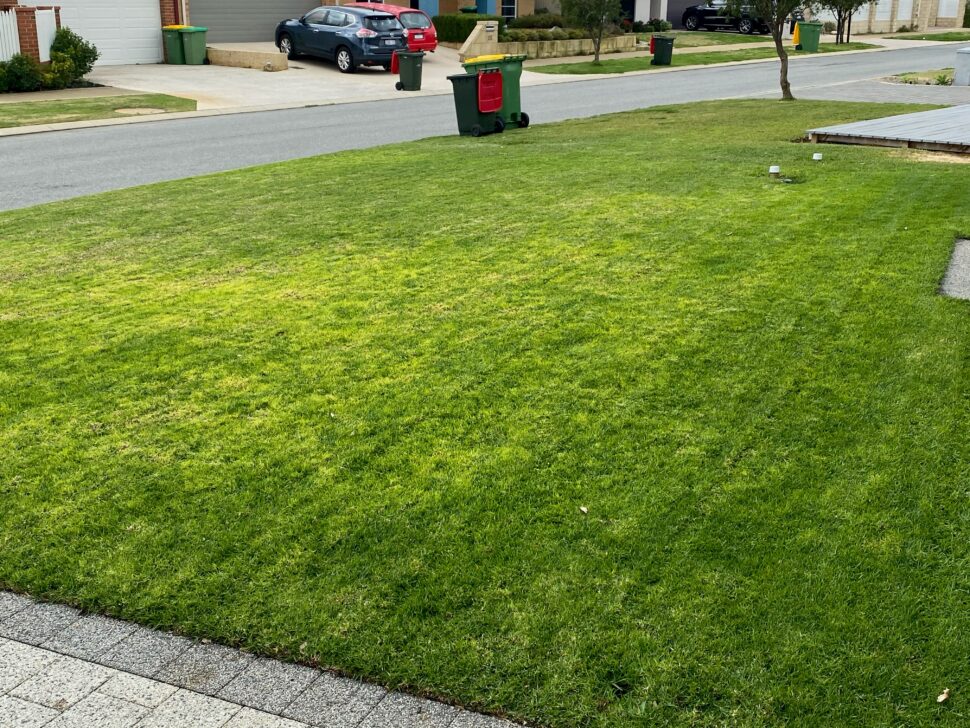
A lawn that starts losing colour can be frustrating, particularly when you’ve been watering and caring for it regularly. For Perth homeowners, sandy soils, hot summers and permanent watering rosters all play a role in common turf health problems, but yellowing grass doesn’t always mean the lawn is failing. In most cases, it is responding to a specific condition that, once identified, can be addressed with the right approach.
Whether you’ve recently laid an instant roll-on lawn or you’re caring for an established yard, understanding the early warning signs can make the difference between a quick recovery and a long-term decline in your lawn.
How to Tell What’s Wrong With Your Lawn
Before changing your watering or applying fertiliser, look at where and how the colour is changing.
- Is the whole lawn losing colour, or only certain areas?
- Are yellow patches appearing after hot weather or dry spells?
- Has the watering changed recently or become uneven?
- Has the lawn been mown shorter than usual?
- Are there bare patches, insects or increased bird activity?
Uniform yellowing across the whole lawn usually points to watering or nutrition. Patchy or irregular discolouration often suggests pests, drainage or uneven irrigation. A blue-grey tint appearing before yellowing is a strong sign of moisture stress. These observations support keeping your lawn green year-round and help you choose the right solution first time.
6 Common Reasons Your Lawn Is Turning Yellow
1. Too Much or Too Little Water
Incorrect watering is behind more cases of yellow grass Perth homeowners experience than almost any other cause. Too little water causes moisture stress, while too much can prevent roots from getting the oxygen they need; both affect lawn colour and health.
Perth’s sandy soils drain quickly and can become water repellent during summer, meaning water sometimes runs off the surface before reaching the root zone. An underwatered lawn turns blue-grey first, then yellows and feels dry underfoot. An overwatered lawn tends to yellow gradually and may feel soft underfoot.
Watering deeply and less frequently encourages stronger root development and improves performance between roster days. Where water runs off rather than soaking in, a soil wetter helps restore penetration. During periods of extreme heat, the WA Water Corporation also permits hand watering between roster days to protect the lawn.
2. Nutrient Deficiencies
A lawn gradually losing its depth of green colour, without obvious patchiness, often has a nutrient issue. Nitrogen drives green leaf growth, phosphorus supports root development, and potassium helps the grass resist seasonal stress. When any are in short supply, the lawn becomes pale and less vigorous over time.
Perth’s sandy soils don’t hold nutrients as well as heavier soils, so regular fertilising matters more here. A slow-release NPK fertiliser formulated for WA conditions, applied at the start of each season, helps maintain consistent colour and supports long-term lawn health. Greenacres offers a maintenance fertiliser developed specifically for WA conditions and turf varieties; apply when turf is dry, water in well and avoid applying on days above 40 degrees. For maintaining a Sir Walter lawn and other warm season varieties, timing fertiliser to the active growing phase gives the best result.
3. Lawn Stress from Heat or Weather
Perth’s hot summers place real stress on lawns. When temperatures push well past 35 degrees, and evaporation is high, even well-maintained grass can lose colour, particularly in areas with full afternoon sun or fast-draining soil. Heat stress typically shows as a blue-grey tint before yellowing. If the lawn also feels dry and crunchy, moisture stress is almost certainly involved.
Soil wetters improve water penetration and help the soil retain moisture during extreme heat. For families with a healthy buffalo lawn, varieties like Sir Walter and Palmetto are well-suited to Perth’s conditions due to their deeper root systems and natural drought tolerance.
4. Mowing Too Short
Cutting the lawn too short removes the green leaf and exposes the pale, straw-coloured stem underneath, a problem known as scalping. This is commonly mistaken for a watering issue, and buffalo varieties are particularly sensitive because the broad leaf carries most of the visible colour.
Avoid removing more than one-third of the leaf in a single mow. Mow regularly at the correct height during summer; during winter, growth naturally slows and frequency can reduce to every two to three weeks.
5. Pests or Lawn Diseases
Not every yellow patch comes from watering or fertiliser. Armyworms, lawn grubs and fungal disease can all damage turf health, particularly when the lawn is already under seasonal stress. Signs include irregular yellow or brown patches without a clear cause, thinning grass, insect activity beneath the thatch, or birds regularly pecking at the lawn.
Watering in the evening increases fungal disease risk, as moisture sits on the leaf overnight. Watering in the morning is better practice. If pests are suspected, inspect the base of the grass for insects first and seek guidance before applying any treatments.
6. Poor Soil or Drainage
The health of any lawn depends on what is underneath it. Perth’s sandy soils allow moisture and nutrients to move through quickly, meaning the root zone can dry out faster than expected. Compaction in high-traffic areas can prevent water from reaching the roots. Water-repellent soil, where water beads on the surface and runs away, is also a common Perth problem during summer.
A soil wetter breaks down this repellent layer and restores penetration to the root zone. Aerating compacted areas improves root access to water and nutrients. Where soil conditions are poor overall, improving preparation before laying new turf supports better establishment and long-term lawn performance.
How to Bring a Yellow Lawn Back to Life
Most lawns respond well when the right steps are taken in order:
- Identify the cause first: treat the right problem before purchasing any products
- Check soil moisture: if it is dry well below the surface, deep watering should come before anything else
- Apply a soil wetter if needed: particularly where water is not penetrating Perth’s sandy soil
- Fertilise once moisture conditions are right: fertilising a dry or stressed lawn can cause further damage
- Adjust mowing height and allow the lawn to recover before returning to a lower cut
- Monitor for pests and seek guidance before applying treatments
Most warm season grasses, including Sir Walter, Palmetto and Village Green, recover well once the underlying cause is addressed.
When It May Be Time to Replace Your Lawn
Most yellow lawns can be restored without replacement. It becomes worth considering when large areas have permanently failed, the lawn continues to struggle despite appropriate care, or the variety isn’t suited to the property’s conditions. Starting fresh with healthy, weed-free turf and the right variety selection gives homeowners a stronger foundation for long-term lawn performance.
Choosing the Right Lawn for Perth Conditions
Long-term lawn performance starts with selecting a variety suited to your property, lifestyle and local conditions.
For homeowners seeking a drought-tolerant Sir Walter lawn, Sir Walter Soft Leaf Buffalo is well-suited to Perth, requires less water once established, with high wear tolerance, good shade performance and strong salt tolerance for properties using bore water. Its soft leaf texture makes it suitable for families with children and pets. Palmetto is a popular choice for homes with shade from trees or pergolas and suits a lower maintenance approach. Village Green Premium Kikuyu suits active family backyards where wear tolerance and recovery matter, and holds colour through winter better than most couch varieties.
Choosing the variety that matches your sun levels, usage and maintenance preferences makes ongoing care easier and supports better performance year-round.
A yellow lawn doesn’t always mean a failing lawn; in many cases, small adjustments to watering, mowing or fertilising are all it takes to support recovery. Greenacres Turf Group has been growing and supplying premium turf to Perth homeowners since 1990. As WA’s largest turf farm, all varieties are freshly cut and delivered within 24 hours of harvest, with free practical guidance on installation, watering and long-term lawn care. For more on keeping Sir Walter turf green year-round, visit the Greenacres website or speak to the team directly.
FAQ
Can a yellow lawn turn green again?
Yes. Most lawns recover once the underlying cause, whether watering, nutrition, heat stress or soil conditions, is correctly identified and addressed.
Does overwatering cause yellow grass?
Yes. Too much water can prevent roots from getting the oxygen they need, leading to gradual yellowing and reduced lawn health.
Will fertiliser fix a yellow lawn?
Only if nutrient deficiency is the cause; always identify the right problem before applying any treatment.
Why is only part of my lawn turning yellow?
Localised yellowing often relates to uneven irrigation, soil drainage, shade, pests or heavy wear rather than a whole-lawn issue.
Which lawn variety stays greener in Perth?
Buffalo varieties such as Sir Walter and Palmetto perform consistently in Perth’s conditions. Village Green Kikuyu also holds colour through winter better than most couch varieties.